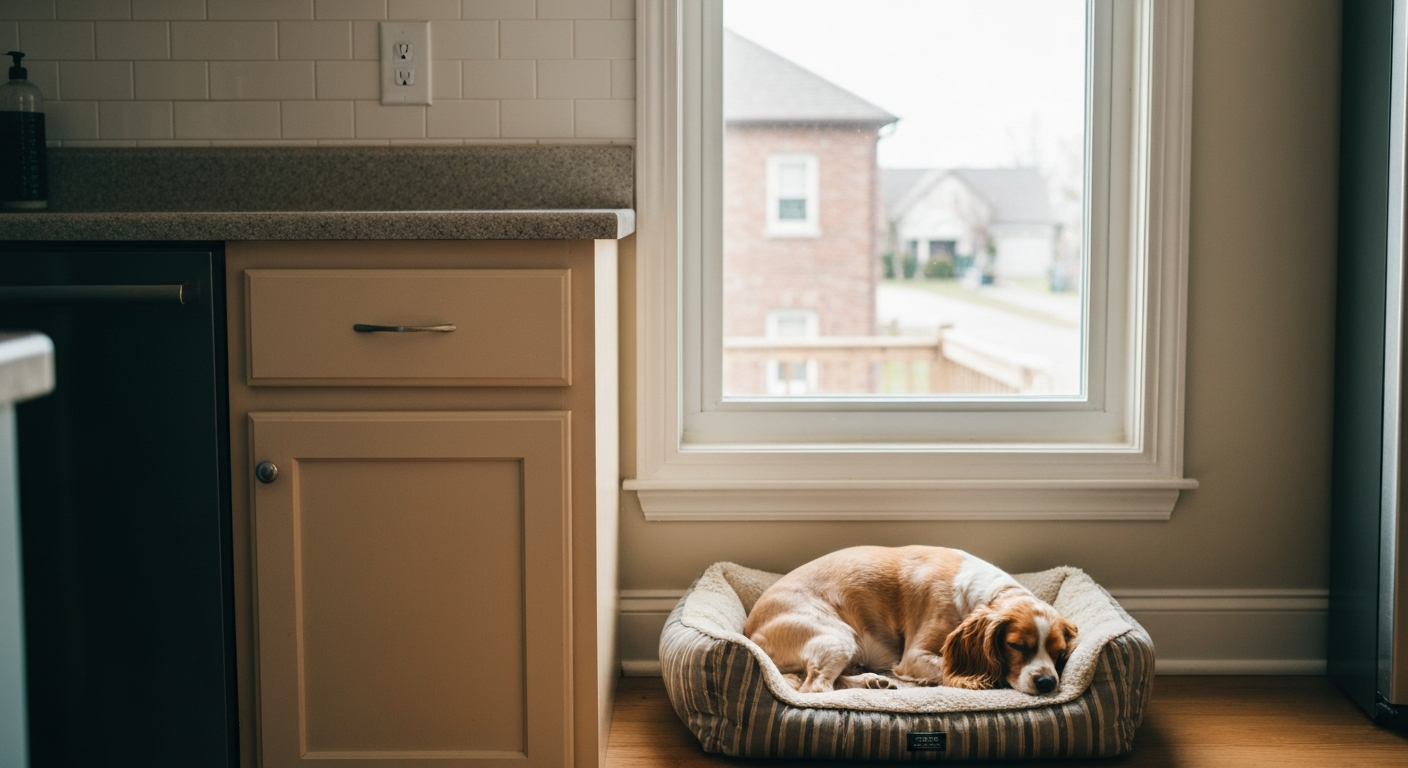
Best Emotional Support Animals for New Jersey Apartments — A Clinician-Vetted Lineup
Informational disclaimer: The content below is provided for general educational purposes only and does not constitute medical, mental-health, or legal advice. Every individual's therapeutic needs are unique. Please consult a New Jersey-licensed mental health professional to determine whether an emotional support animal is clinically appropriate for you, and consult a New Jersey-licensed attorney for any landlord dispute or FHA enforcement question.
Somewhere between the dense urban corridors of Jersey City and the quieter suburban streets of Montclair, millions of New Jersey residents are navigating a rental market that is, by almost any measure, among the most competitive in the country. Lease agreements are thick with pet restrictions. Building managers enforce weight limits, breed bans, and species exclusions with understandable consistency. And yet, for renters whose mental health may genuinely benefit from the companionship of an animal, federal law creates a meaningful — and enforceable — carve-out.
Under the Fair Housing Act (FHA) and HUD's authoritative guidance notice FHEO-2020-01, Assessing a Person's Request to Have an Animal as a Reasonable Accommodation Under the Fair Housing Act, a housing provider is generally required to consider a reasonable accommodation request for an emotional support animal when that request is supported by documentation from a licensed mental health professional (LMHP). The ESA letter itself — not a registry, not an ID card, not an online certificate — is the legally recognized instrument. HUD has explicitly confirmed that so-called "ESA registries" and "national databases" carry no legal weight whatsoever.
But here is a question that often goes unasked in the rush toward accommodation paperwork: which animals are actually well-suited to apartment living in New Jersey? A well-matched ESA is not only better for the resident's mental health — it is far less likely to generate neighbor complaints, lease violations, or landlord disputes that could jeopardize an otherwise valid accommodation. With that practical reality in mind, our clinical team has assembled a ranked, clinician-informed guide to the best emotional support animals for New Jersey apartments.
How This List Was Assembled
Each animal on this list was evaluated against four criteria that matter in a dense, multi-unit residential environment: noise level, space requirements, allergen profile (a courtesy consideration for neighbors and building staff), and documented therapeutic efficacy in peer-reviewed literature. None of these criteria override the most important variable of all — your individual therapeutic relationship with the animal and your clinician's professional assessment. A licensed clinician will always make the final determination of whether an ESA is therapeutically appropriate for your specific mental health needs.
One important clarification before we begin: an ESA does not need to be a dog or a cat. HUD's FHEO-2020-01 notice makes clear that housing providers must evaluate ESA requests on an individual basis regardless of species, with the primary exception being animals that pose a direct threat or fundamental alteration of the premises. That said, certain species are naturally better suited to confined living spaces — and those realities are reflected below.
The 9 Best Emotional Support Animals for New Jersey Apartments
1. Cats — The Gold Standard for Urban ESA Living
If apartment suitability were the only variable, domestic cats would win without contest. They are self-contained, naturally quiet, require no outdoor access to thrive, and — for many people managing anxiety, depression, PTSD, or loneliness — the act of stroking a purring cat has been associated in research settings with measurable reductions in cortisol levels. In a New Jersey apartment context, that combination of low logistical burden and high therapeutic yield is genuinely difficult to match.
Cats also present fewer complications at the landlord interface. Because they are already the most commonly permitted pet in New Jersey apartment buildings, a landlord encountering an ESA cat accommodation request is unlikely to raise concerns about space or disruption — which means your LMHP-issued ESA letter can do its legal work without unnecessary friction. Breeds such as the Ragdoll, British Shorthair, and Scottish Fold are particularly noted for calm, low-vocalization temperaments, though individual personality varies considerably. Prospective ESA owners who are considering allergen sensitivity in a shared-wall building may wish to explore lower-dander breeds such as the Siberian or Balinese.
For a deeper look at quiet, apartment-friendly cat breeds specifically evaluated for New Jersey renters, see our companion guide on ESA cats in New Jersey — quiet companions for urban living.
Practical takeaway: Cats are the most apartment-compatible ESA option available, combining strong therapeutic evidence with minimal space, noise, and neighbor-relations concerns. If a clinician determines that feline companionship is therapeutically appropriate for you, the operational case for pursuing an FHA accommodation is exceptionally strong.
2. Dogs (Small to Medium, Calm Breeds) — Deeply Therapeutic, With Careful Selection
Dogs occupy a uniquely powerful position in the ESA landscape. The human-canine bond is among the most extensively studied therapeutic relationships in psychiatry and psychology, with robust evidence linking dog ownership to reduced symptoms of depression, generalized anxiety, and social isolation — all conditions that affect substantial numbers of New Jersey residents. For individuals whose mental health condition involves motivation deficits or social withdrawal, the structured routine that a dog demands (meals, walks, play) can itself function as a clinically meaningful intervention.
In a New Jersey apartment, however, the word "dog" carries an important asterisk. Large, high-energy breeds in confined spaces without adequate daily exercise can develop behavioral problems that generate neighbor complaints and, potentially, landlord challenges to an otherwise valid ESA accommodation. The FHA does not require a landlord to accept an animal that poses a direct threat — and a chronically barking, destructive dog may create avoidable complications. Clinician-informed breed selection, therefore, matters. Breeds that tend to adapt well to New Jersey apartment environments include the Cavalier King Charles Spaniel, French Bulldog, Shih Tzu, Pug, Bichon Frisé, and the Greyhound (yes — despite their size, Greyhounds are famously low-energy indoors).
It is worth noting that an ESA designation does not confer public-access rights the way a trained Psychiatric Service Dog (PSD) does. If broad public access or air travel accommodation is a priority for you, a licensed clinician can discuss whether a PSD might be a more appropriate path. For apartment housing specifically, however, a well-chosen ESA dog supported by a properly issued letter from a New Jersey-licensed LMHP — consistent with FHA and FHEO-2020-01 requirements — is a well-established and legally protected option. Explore our detailed breakdown of the best ESA dog breeds for New Jersey apartments for breed-by-breed analysis.
Practical takeaway: Dogs offer exceptional therapeutic depth, but apartment suitability demands intentional breed and temperament selection. Prioritize calm, lower-energy breeds, and ensure your ESA letter is issued by a licensed New Jersey clinician who has conducted a thorough, individualized evaluation.
3. Rabbits — Surprisingly Therapeutic, Genuinely Apartment-Friendly
Rabbits are among the most underrated emotional support animals in the mental health community, and they are worthy of considerably more attention than they typically receive. A well-socialized domestic rabbit — particularly breeds such as the Holland Lop, Mini Rex, or Lionhead — can be remarkably affectionate, interactive, and responsive to its owner's emotional state. Many people who work with anxiety or sensory-processing challenges find that the tactile experience of holding or grooming a rabbit provides grounding that is both immediate and calming.
From a New Jersey apartment-compatibility standpoint, rabbits score exceptionally well. They are silent animals (the occasional soft thump notwithstanding), require no outdoor access, and their territorial footprint can be contained within a well-designed enclosure and a modest exercise area. They produce no dander in the manner that dogs and cats do — though rabbit allergies do exist — and they are odorless when their enclosures are maintained appropriately. Notably, rabbits live between eight and twelve years with proper care, meaning the therapeutic relationship can develop meaningful continuity over time.
HUD's FHEO-2020-01 guidance does not limit ESA status to dogs and cats, and rabbits have been successfully accommodated under FHA reasonable-accommodation frameworks in numerous documented cases. A landlord's blanket "no pets" policy does not, as a matter of federal law, automatically override a properly documented ESA accommodation request — regardless of species. Our dedicated guide on rabbits as emotional support animals in New Jersey covers housing rights, care requirements, and what to expect from the clinician evaluation process.
Practical takeaway: Rabbits combine genuine therapeutic value with an outstanding apartment footprint. For renters in densely packed New Jersey buildings where noise and allergen concerns are real, a rabbit may offer an ideal balance of companionship and practicality.
4. Guinea Pigs — Social, Gentle, and Surprisingly Comforting
Guinea pigs (cavies) have a longer history in therapeutic settings than many people realize. Their use in animal-assisted therapy programs — particularly with children and adults managing autism spectrum conditions, anxiety, and trauma — is well-documented in clinical literature. Their characteristic "purring" vocalization (produced through a mechanism distinct from feline purring) has an undeniable calming effect on many handlers, and their social nature means they actively seek interaction rather than tolerating it.
In a New Jersey apartment, guinea pigs are exceptional neighbors. They are quiet — their vocalizations rarely penetrate shared walls — they require no outdoor time, and their care routine is uncomplicated and predictable, which itself can be therapeutic for individuals managing conditions that benefit from structured daily routines. Two guinea pigs are generally recommended by veterinary behaviorists, as these are highly social animals; a bonded pair can also provide enriched companionship for their owner.
As with all ESA species beyond the familiar dog and cat, a landlord receiving an accommodation request for a guinea pig may have questions. This is precisely why the quality of your ESA letter matters. A letter from a licensed New Jersey mental health professional — an LCSW, LMHC, LMFT, psychologist, or psychiatrist — who has conducted a genuine clinical evaluation carries the legal and ethical weight that a form-letter from an out-of-state website simply cannot. Learn more about securing proper documentation in our guide to the New Jersey ESA housing letter and FHA protections.
Practical takeaway: Guinea pigs offer a low-footprint, high-affection ESA option with real therapeutic precedent. Their size, silence, and social nature make them a compelling choice for New Jersey renters seeking a clinically grounded accommodation that places minimal demands on shared living spaces.
5. Birds (Parakeets and Cockatiels) — Vocal Companionship for the Right Resident
Birds occupy a nuanced position on this list. For the right individual — particularly those experiencing profound loneliness, depression, or the isolation that can accompany grief or social anxiety — a parakeet or cockatiel can be a profoundly meaningful companion. These birds are intelligent, trainable, and capable of genuine emotional responsiveness to their owners. The daily ritual of interaction, vocalization, and training has been observed clinically to support mood regulation and a sense of purpose in some individuals.
The honest apartment caveat is noise. Cockatiels and parakeets are not silent. They vocalize during daylight hours with a regularity and volume that may, in thin-walled New Jersey apartment buildings, generate neighbor friction. A resident considering a bird ESA should realistically assess their building's acoustic environment. Quieter bird species — including budgerigars at lower vocalization volumes, or even canaries, whose song is melodic rather than sharp — may be better apartment neighbors in some contexts. Larger parrots (macaws, African Greys) are generally not suitable ESA choices for apartment living given their extreme noise levels and complex needs.
Birds are not a conventional ESA choice, and a licensed New Jersey clinician will conduct a thorough, individualized evaluation to determine whether the unique qualities of avian companionship align with your specific therapeutic needs. That individualized assessment process — not a checkbox form and an instant letter — is exactly what gives your ESA documentation its legal legitimacy under FHEO-2020-01.
Practical takeaway: Birds can be deeply therapeutic for specific individuals and conditions, but noise management in shared-wall buildings is a genuine consideration. If avian companionship is clinically appropriate for you, a parakeet or quieter cockatiel may be the most apartment-compatible choice.
6. Hamsters and Gerbils — Small Footprint, Meaningful Routine
Hamsters and gerbils rarely appear on ESA best-of lists, which is perhaps an oversight. For individuals managing anxiety, ADHD-adjacent attentional challenges, or conditions for which the responsibility of pet care provides meaningful cognitive and emotional structure, these small rodents offer a surprisingly rich therapeutic relationship relative to their minimal space requirements. Watching a hamster navigate an enrichment habitat, or hand-taming a gerbil over weeks of patient interaction, engages attentiveness and nurturing instincts in ways that clinical literature on animal-assisted intervention increasingly validates.
From an apartment-compatibility standpoint, hamsters and gerbils are nearly ideal. They are silent to their neighbors (the wheel spin is contained within the owner's unit), require no outdoor access, produce minimal odor with proper husbandry, and represent minimal risk of disruption to other residents. For New Jersey renters in particularly restrictive buildings — high-rises with aggressive pet policies, for instance — these species may represent the path of least friction in the accommodation process, while still delivering genuine therapeutic benefit.
It is worth emphasizing: the legitimacy of any ESA accommodation rests on the quality of the underlying letter, not the size or species of the animal. A properly issued letter from a licensed New Jersey LMHP, grounded in a real clinical evaluation, is your legal instrument under the FHA — whether your ESA is a German Shepherd or a dwarf hamster.
Practical takeaway: Hamsters and gerbils are worth serious consideration for New Jersey renters who want a therapeutically meaningful companion without any of the logistical complexity that larger animals introduce. Their apartment footprint is essentially zero from a neighbor-impact perspective.
7. Fish — Calm, Evidence-Backed, and Zero Neighbor Impact
The therapeutic effects of watching fish in aquariums have been documented in peer-reviewed research for decades. Studies conducted in clinical and care-facility settings have found associations between aquarium observation and reduced anxiety, lowered blood pressure, and improved mood in participants across a range of ages and conditions. For individuals managing generalized anxiety disorder, PTSD, or stress-related conditions, a well-maintained freshwater aquarium may offer genuinely meaningful daily support.
In a New Jersey apartment context, fish are the most logistically uncomplicated ESA option on this list. They make no noise that penetrates walls, produce no allergens, require no outdoor time, and can be accommodated in any living space with a suitable surface and electrical outlet for filtration. The care routine — feeding, water changes, tank maintenance — provides the kind of predictable, rewarding daily structure that mental health professionals often recognize as therapeutically valuable in its own right.
It is important to note, however, that fish may represent a less common ESA choice, and some landlords may not initially anticipate them in this context. A clinician-issued letter that clearly articulates the therapeutic rationale — in accordance with HUD's FHEO-2020-01 framework — is especially important for less conventional species. If you encounter landlord resistance to an unusual ESA species, consulting a New Jersey-licensed attorney or your local legal aid office for FHA enforcement guidance is strongly recommended.
Practical takeaway: Aquarium fish offer clinically recognized anxiety and mood benefits with an essentially zero apartment-disruption profile. For renters in the most restrictive New Jersey buildings, a fish ESA may represent the most viable path to legally recognized animal companionship.
8. Miniature Horses — Rarely Appropriate, But Legally Recognized
This entry comes with an important upfront qualification: miniature horses are almost never appropriate for New Jersey apartment living. HUD's FHEO-2020-01 guidance specifically acknowledges miniature horses as a potential assistance animal, but the notice equally specifies that housing providers may consider factors including whether the animal's presence fundamentally alters the nature of the housing facility. A miniature horse in a third-floor walk-up in Hoboken would, by any reasonable analysis, pose challenges that exceed the scope of a reasonable accommodation.
The reason miniature horses appear on this list is not to suggest they are a realistic apartment ESA option. Rather, it is to correct a persistent misconception: some individuals believe that ESA law only applies to dogs and cats, or that unusual ESA species are automatically invalid. This is not what federal law says. HUD's guidance requires individualized assessment of each accommodation request regardless of species. A miniature horse ESA letter issued by a licensed clinician following a genuine therapeutic evaluation has legal standing — in the right housing context (a ground-floor unit with yard access in a suburban New Jersey setting, for instance).
For New Jersey renters in standard apartment buildings, we include this entry as a transparency note rather than a practical recommendation. If you believe a miniature horse may be therapeutically appropriate for your needs, that conversation belongs first with a licensed New Jersey mental health professional, and then — given the almost certain complexity of the accommodation process — with a New Jersey-licensed attorney who specializes in housing and disability law.
Practical takeaway: Miniature horses are legally recognized under federal guidance but are rarely practical in New Jersey apartment settings. Their inclusion here serves to illustrate the breadth of the law and the importance of individualized, clinician-led ESA decisions — rather than as a genuine apartment recommendation.
9. Therapy-Trained Mixed-Species Companions — The Emerging Frontier
A growing body of clinical literature and emerging practice within animal-assisted therapy is paying increased attention to the role of basic training and enrichment in maximizing the therapeutic benefit of ESA ownership — regardless of species. A cat trained to respond to its owner's distress cues, a rabbit accustomed to gentle handling during anxiety episodes, or a dog with foundational obedience behaviors is a fundamentally better therapeutic partner than an untrained animal, and also a substantially better apartment neighbor.
This is not a legally required component of ESA designation — an ESA is not required to be trained in the way a service animal is — but it is a clinically and practically informed one. New Jersey residents who invest in basic training for their ESA not only deepen the therapeutic relationship; they reduce the likelihood of the behavioral issues that can give landlords grounds to challenge an accommodation under the "direct threat" or "fundamental alteration" provisions of the FHA. Our guide on ESA training basics in New Jersey covers foundational approaches applicable across species.
At the licensed-clinician level, ESA suitability is always assessed in relation to the specific animal, the individual's living situation, and the realistic demands of care. A clinician who determines that an ESA may be therapeutically appropriate for you will often have valuable perspectives on which species and which individual animals are most likely to support your treatment goals — perspectives that no online quiz, registry, or instant-letter service can replicate.
Practical takeaway: Whatever ESA species you and your clinician determine is appropriate, basic training and behavioral enrichment will strengthen both the therapeutic relationship and your standing as a cooperative, low-impact resident — a genuine practical advantage in New Jersey's competitive apartment market.
The Legal Framework Every New Jersey ESA Renter Should Know
Understanding your rights as a New Jersey renter with an ESA requires fluency in two overlapping legal frameworks: federal FHA protections and New Jersey's own Law Against Discrimination (NJLAD), N.J.S.A. 10:5-1 et seq., which in many respects provides protections that run parallel to — and in some areas extend beyond — federal minimums.
| Legal Instrument | Scope | Key Provision |
|---|---|---|
| Fair Housing Act (FHA), 42 U.S.C. § 3604 | Federal | Prohibits discrimination in housing based on disability; requires reasonable accommodation |
| HUD FHEO-2020-01 | Federal guidance | Defines how housing providers must assess ESA accommodation requests; confirms registries have no legal weight |
| NJ Law Against Discrimination, N.J.S.A. 10:5-1 et seq. | State | Prohibits housing discrimination based on disability; provides state-level enforcement through NJDCR |
Under FHEO-2020-01, a housing provider receiving an ESA accommodation request may ask two questions: (1) does the person have a disability? and (2) is there a disability-related need for the animal? They may NOT ask for detailed medical records, a specific diagnosis, or documentation beyond what reasonably establishes those two points. A properly written letter from a licensed New Jersey mental health professional — on professional letterhead, with license number, state of licensure, and a clinical assessment of the nexus between the disability-related need and the requested accommodation — satisfies this standard.
What a housing provider may NOT do: charge a pet deposit for an ESA (an ESA is not a pet under the FHA), refuse to process the accommodation request, or impose a blanket species ban without individual assessment. What they CAN do: deny an accommodation if the specific animal poses a direct threat to health or safety, or if the accommodation would impose an undue financial or administrative burden or fundamentally alter the nature of the housing. These are high bars, and disputes in this area are exactly why consultation with a New Jersey-licensed attorney — or your local legal aid organization — is invaluable.
For a comprehensive walkthrough of the New Jersey ESA housing letter process, FHA protections, and what to expect from a legitimate clinician evaluation, visit our dedicated resource on New Jersey ESA housing letters and FHA protections.
What Makes an ESA Letter Legitimate in New Jersey?
This question deserves direct, unambiguous attention — because the internet is unfortunately populated with services that charge modest fees for documents that carry no legal or clinical validity. HUD has explicitly warned consumers that online ESA registries, ID card services, and "certified ESA" databases are not recognized under any federal or state law. A certificate purchased from a website, a laminated card, or a profile in a national animal database does not constitute a valid ESA accommodation request under the FHA. Period.
A legitimate New Jersey ESA letter has the following characteristics:
- It is written by a licensed mental health professional — an LCSW, LMHC, LMFT, licensed psychologist, or psychiatrist — who holds an active New Jersey license
- It is written on professional letterhead and includes the clinician's name, license type, license number, and New Jersey state of licensure
- It reflects a genuine, individualized clinical evaluation of the requester — not a form letter generated by an algorithm
- It establishes the nexus between the individual's disability-related need and the therapeutic benefit of the requested ESA
- It does not promise "guaranteed housing approval" — because no clinician can guarantee a housing outcome; they can only attest to clinical findings
At ESA Letter New Jersey, every letter is issued by a licensed New Jersey clinician following a real evaluation. We do not offer instant approvals, guaranteed outcomes, or registry certificates — because those things do not exist in any legally meaningful sense, and our clients deserve documentation that will actually stand up when a landlord, property manager, or housing authority reviews it.
A note on air travel: If you are considering an ESA specifically for airline accommodation, it is important to understand that the U.S. Department of Transportation revised its Air Carrier Access Act regulations in 2021. Airlines are no longer required to accommodate emotional support animals as they once were; most major carriers now treat ESAs as regular pets subject to standard pet policies. If airborne accommodation for a mental health-related animal is a priority, a New Jersey-licensed clinician can discuss whether a trained Psychiatric Service Dog (PSD) — which retains ACAA protections — may be a more appropriate path for your needs.
Choosing the Right ESA for Your New Jersey Apartment: A Summary
The most apartment-friendly ESA is ultimately the one that a licensed New Jersey clinician determines is therapeutically appropriate for you — and that you are genuinely prepared to care for within your specific living situation. That said, the practical hierarchy for New Jersey apartment renters, based on noise, space, allergen, and therapeutic evidence considerations, tends to look something like this:
- Cats — Gold standard for apartment living; exceptional therapeutic evidence
- Dogs (small to medium, calm breeds) — Deepest therapeutic bond; requires careful breed selection
- Rabbits — Underrated, affectionate, silent; strong apartment profile
- Guinea pigs — Social, gentle, clinically grounded; excellent neighbor relations
- Birds (parakeets, cockatiels) — Interactive and responsive; noise management required
- Hamsters and gerbils — Minimal footprint; strong for routine-building therapeutic value
- Fish — Best evidence for passive anxiety reduction; zero neighbor impact
- Miniature horses — Legally recognized; rarely appropriate in apartment settings
- Any trained companion — Basic behavioral training deepens therapeutic value across all species
Whatever species resonates with your needs and your living situation, the next step is the same: connect with a New Jersey-licensed mental health professional for an individualized evaluation. If a clinician determines that an ESA may benefit your mental health, a properly issued ESA letter is the instrument that translates that clinical finding into a legally recognized housing accommodation under the Fair Housing Act and HUD's FHEO-2020-01 guidance.
Your path to a calmer, more supported life in your New Jersey apartment begins with a real conversation with a real clinician — not a registry, not a form, and not a guarantee. We are here when you are ready.
This article is provided for general informational purposes only and does not constitute medical, mental-health, or legal advice. Individual needs vary. Please consult a licensed New Jersey mental health professional for clinical guidance and a New Jersey-licensed attorney for any housing dispute or FHA enforcement matter.
Ready to start your New Jersey ESA letter?
Licensed New Jersey clinician review. Compliant with state law.
Get My New Jersey ESA Letter